
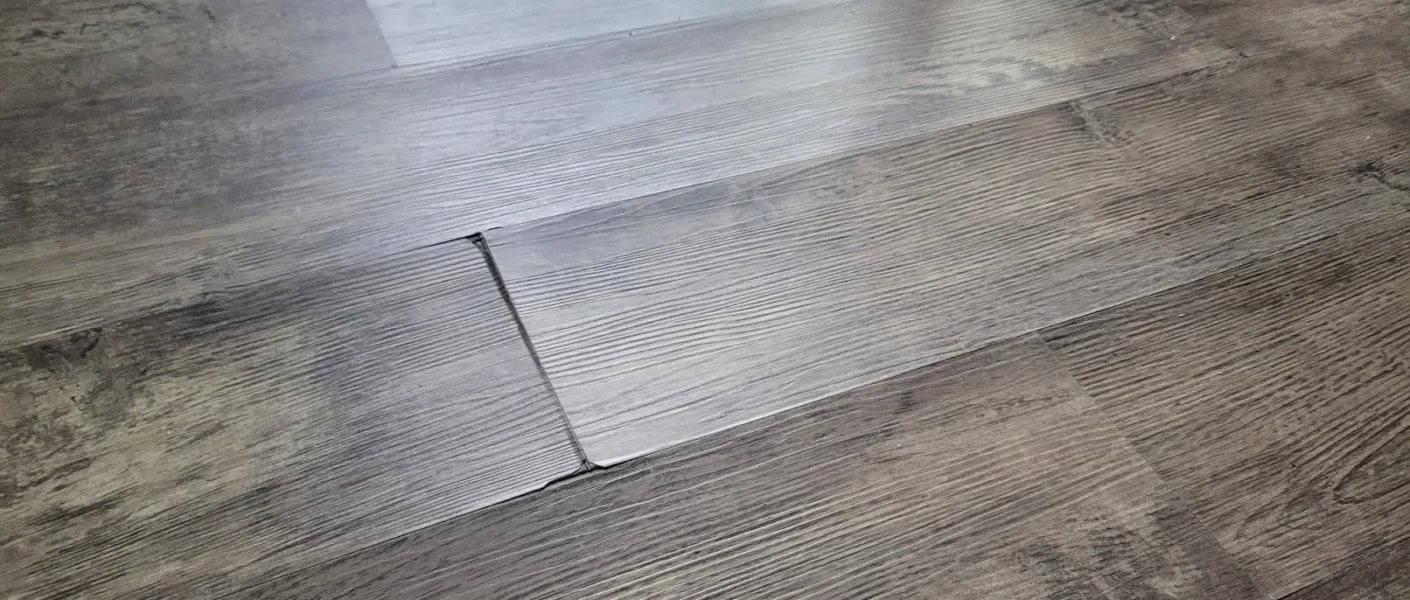
A raised ridge in vinyl plank flooring often looks like product failure. In practice, the plank is rarely the first place I look.
Vinyl plank flooring buckling usually happens because a floating floor cannot expand freely, the subfloor is uneven, excessive heat has distorted the planks, or moisture has affected the substrate or adhesive. The correct fix depends on whether the floor is click-lock, glue-down, SPC, WPC, or flexible LVP.
The most common mistake is simply pressing the floor flat. That may hide the symptom temporarily, but it does not remove the pressure causing the buckle.
Quick Facts: What Buckling Usually Tells You
| What you see | Most likely cause | First check | Typical fix |
|---|---|---|---|
| Raised ridge across several planks | Floating floor is pinched | Expansion gaps and fixed objects | Release the floor and restore the required gap |
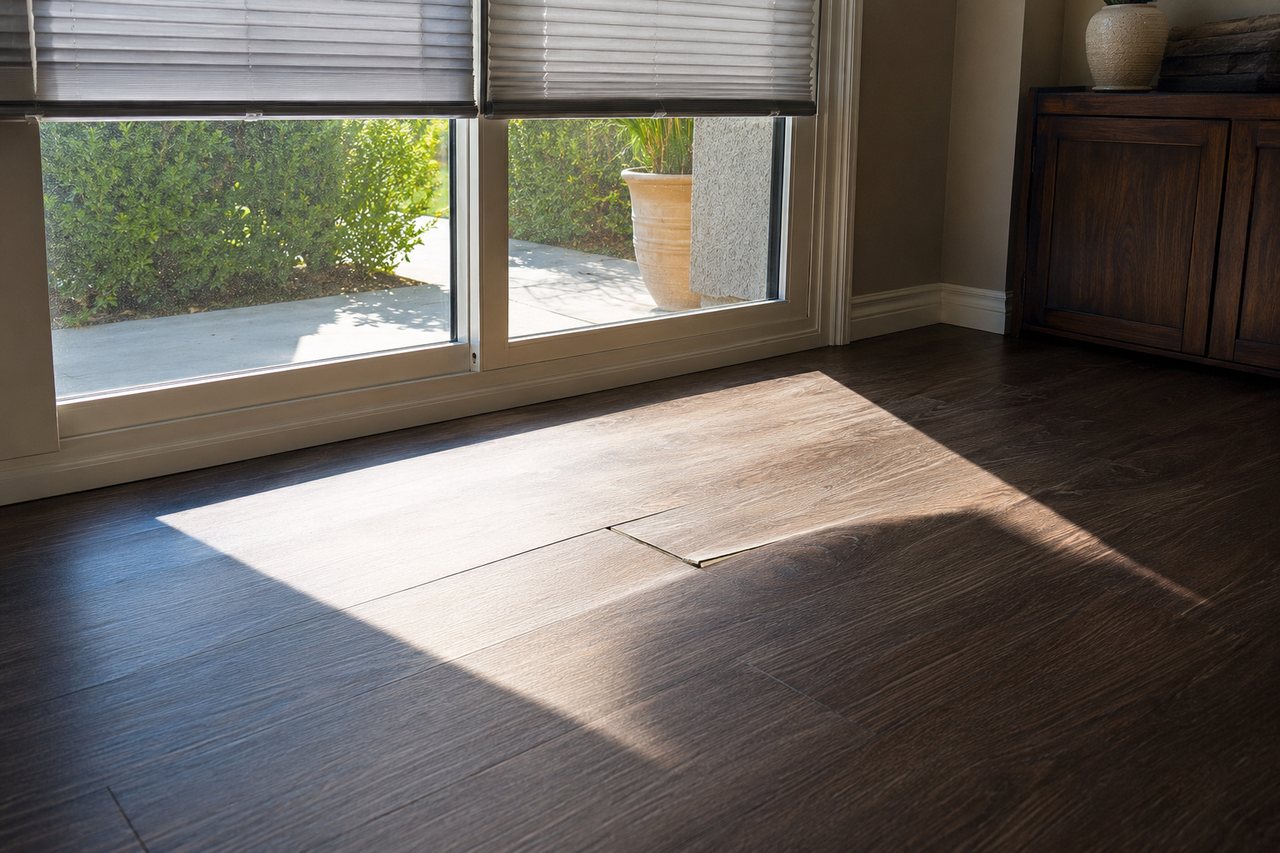
| Buckling beside a sunny window | Excessive surface heat | Floor temperature and sunlight exposure | Control heat and replace distorted planks |
| Springy or clicking planks | Uneven subfloor or damaged locking joints | Subfloor flatness | Lift flooring, level the substrate, and replace damaged planks |
| Buckling near cabinets or an island | Floor trapped beneath permanent fixtures | Toe kicks, trim, and fasteners | Separate the floating floor from fixed structures |
| Isolated lifted glue-down plank | Adhesive bond failure | Adhesive transfer and substrate condition | Remove, prepare, and re-bond the plank |
| Widespread movement after a leak | Wet or expanding substrate | Plumbing, wood moisture, or concrete moisture | Stop the moisture source and correct the substrate |
| Raised joints throughout the room | Wrong or overly soft underlayment | Product construction and underlay type | Remove unapproved underlayment and reinstall |
What Vinyl Plank Buckling Actually Means
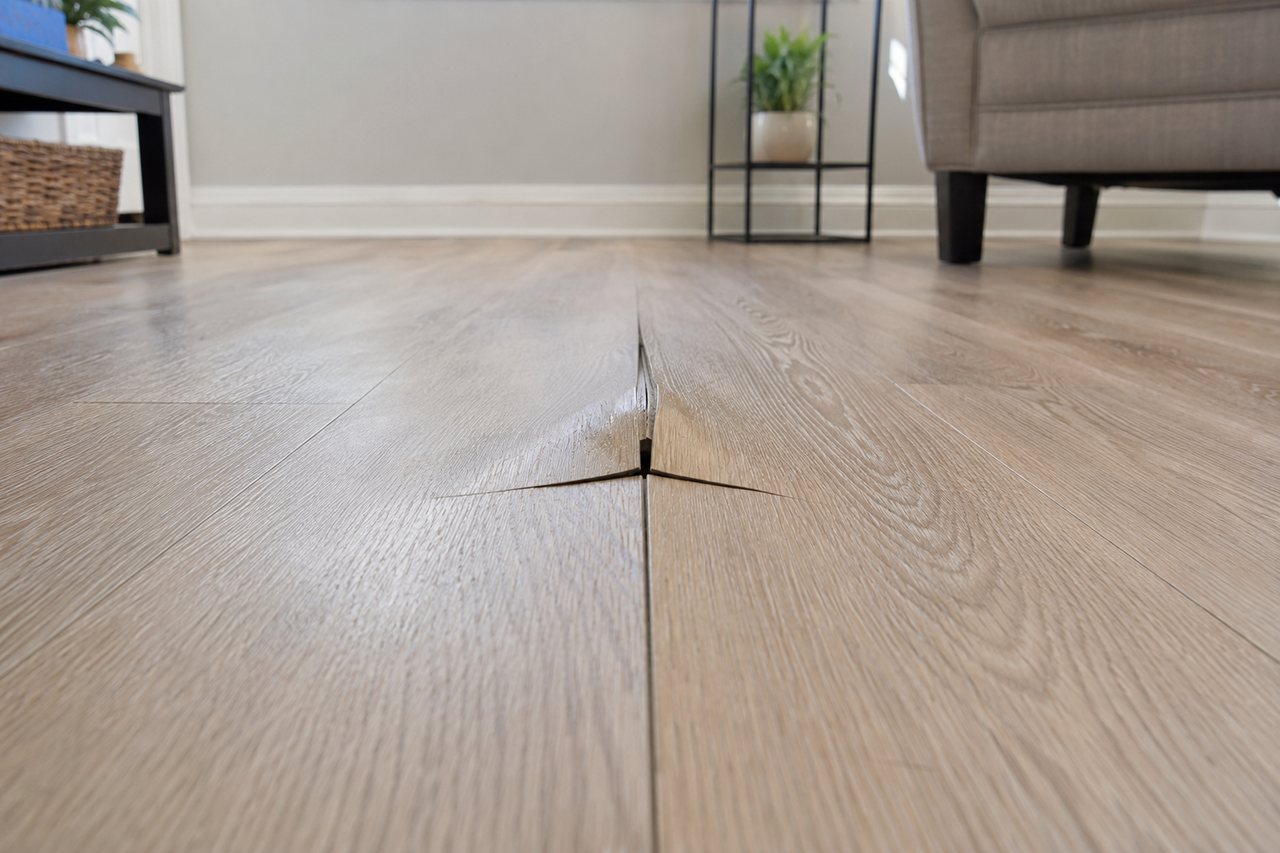
Buckling occurs when one or more planks lift, arch, or form a ridge above the surrounding floor. Installers may also describe severe buckling as tenting or peaking.
It is different from a loose edge, chipped locking joint, or minor lipping between two planks. Those defects can have different causes.
Vinyl plank also behaves differently from solid hardwood. Hardwood can cup because moisture changes the wood fibers. LVP does not have a Janka hardness rating, and it cannot be sanded or refinished.
When a vinyl plank becomes permanently creased or its locking profile breaks, replacement is normally the only lasting surface repair.
The Construction of Your Floor Changes the Diagnosis
Before attempting a repair, determine which vinyl construction you have.
SPC Rigid-Core Flooring
SPC stands for solid polymer core. It has a dense, hard core that provides strong indentation resistance and dimensional stability.
The Resilient Floor Covering Institute identifies SPC as denser and harder than WPC, with improved resistance to indentation and temperature-related movement.
However, SPC still requires the manufacturer’s specified expansion space, flatness, and environmental conditions.
WPC Rigid-Core Flooring
WPC uses an expanded polymer core. It is usually thicker and feels softer underfoot than SPC.
The expanded construction improves comfort and acoustics, but its click-lock edges can still be damaged by subfloor movement, excessive deflection, or unsuitable underlayment.
Flexible Glue-Down LVP
Flexible vinyl plank is bonded directly to the substrate. It does not float as one large interconnected surface.
Buckling in glue-down LVP usually points toward adhesive failure, excessive heat, moisture vapor, contamination, or poor substrate preparation.
The repair method is therefore different from a click-lock floor.
Why Wear Layer Thickness Does Not Prevent Buckling
The wear layer protects the printed design from abrasion, scratches, and traffic. Its thickness does not create expansion space or compensate for a poor subfloor.
A product with a heavy commercial wear layer can still buckle when cabinets trap the floating floor.
Wear layer thickness affects surface longevity, while the core, locking system, and installation conditions control structural performance.
1. The Expansion Gap Is Missing or Blocked
This is the first condition I check on a buckled floating floor.
A click-lock floor expands and contracts as room and surface temperatures change. It must remain free to move beneath the baseboards and trim.
If the planks touch drywall, door jambs, pipes, or adjoining flooring, pressure can accumulate across the installation. The center of the floor may eventually rise because it has nowhere else to move.
Current Mannington ADURA Rigid instructions specify approximately 1/4 inch of expansion space for installations up to 50 by 50 feet, or 2,500 square feet.
Larger areas require more space, while seasonal rooms may require at least 5/8 inch. These figures are product-specific, not universal limits for every LVP floor.
Proven Fix
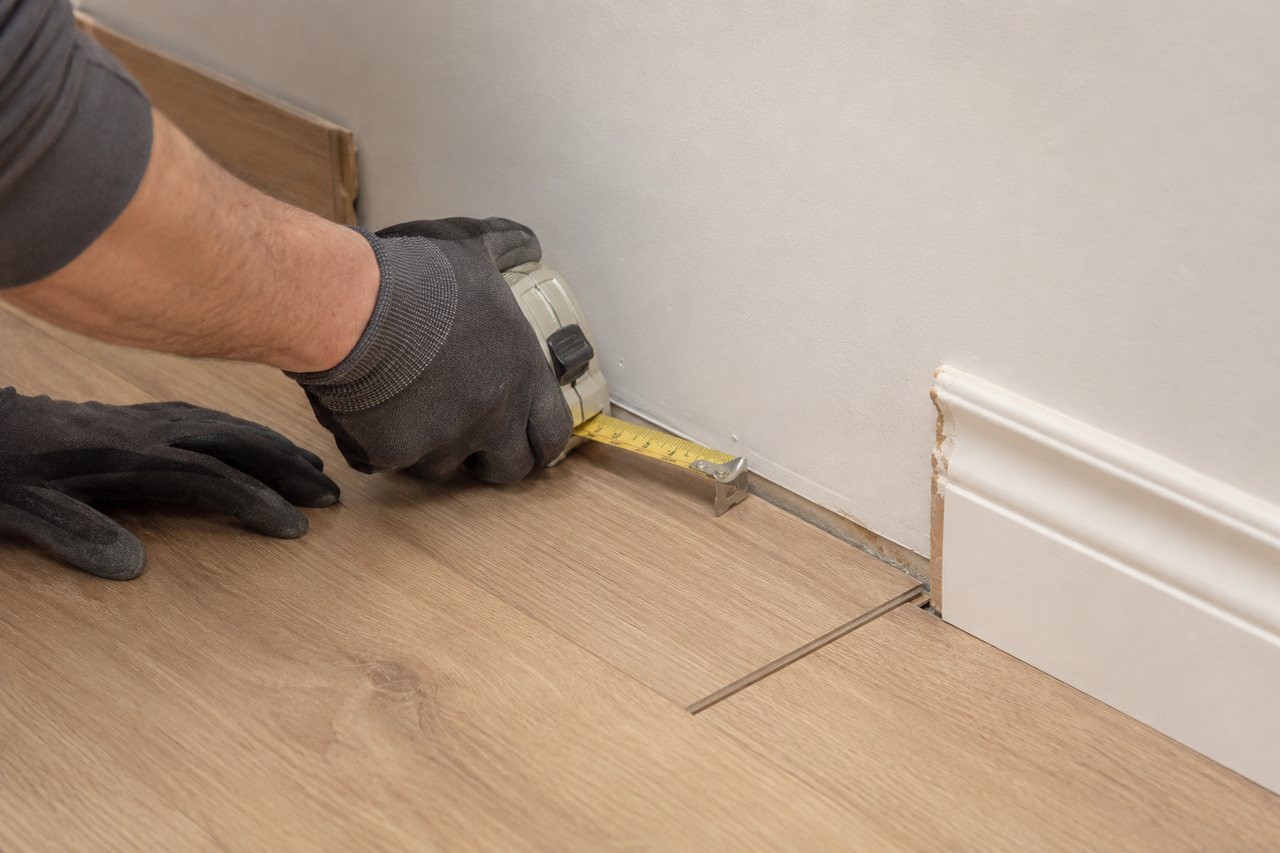
Remove a short section of shoe molding or baseboard near the buckle. Check whether the plank edge is pressing against the wall or another fixed surface.
The repair may involve:
- Trimming the perimeter to restore the specified gap
- Removing fasteners driven through the flooring
- Repositioning restrictive transition moldings
- Creating clearance around pipes and door jambs
- Replacing planks with crushed or broken locks
After releasing the pressure, allow the room to return to its normal service temperature.
A lightly stressed floor may settle. A plank with a permanent crease or damaged joint will not reliably flatten.
2. Cabinets, Islands, or Trim Are Pinning the Floor
Floating LVP must not be treated like nail-down hardwood. It is not normally nailed, screwed, or fastened to the subfloor.
Permanent cabinets, kitchen islands, and built-in furniture can prevent movement when installed over a floating floor.
Transition tracks and baseboards can cause the same problem when their fasteners pass through the planks.
Mannington’s current rigid-core guide states that cabinets and kitchen islands should not be installed on top of its floating ADURA Rigid flooring.
It also warns against fastening moldings through the product or allowing the floor to become pinched.
Proven Fix
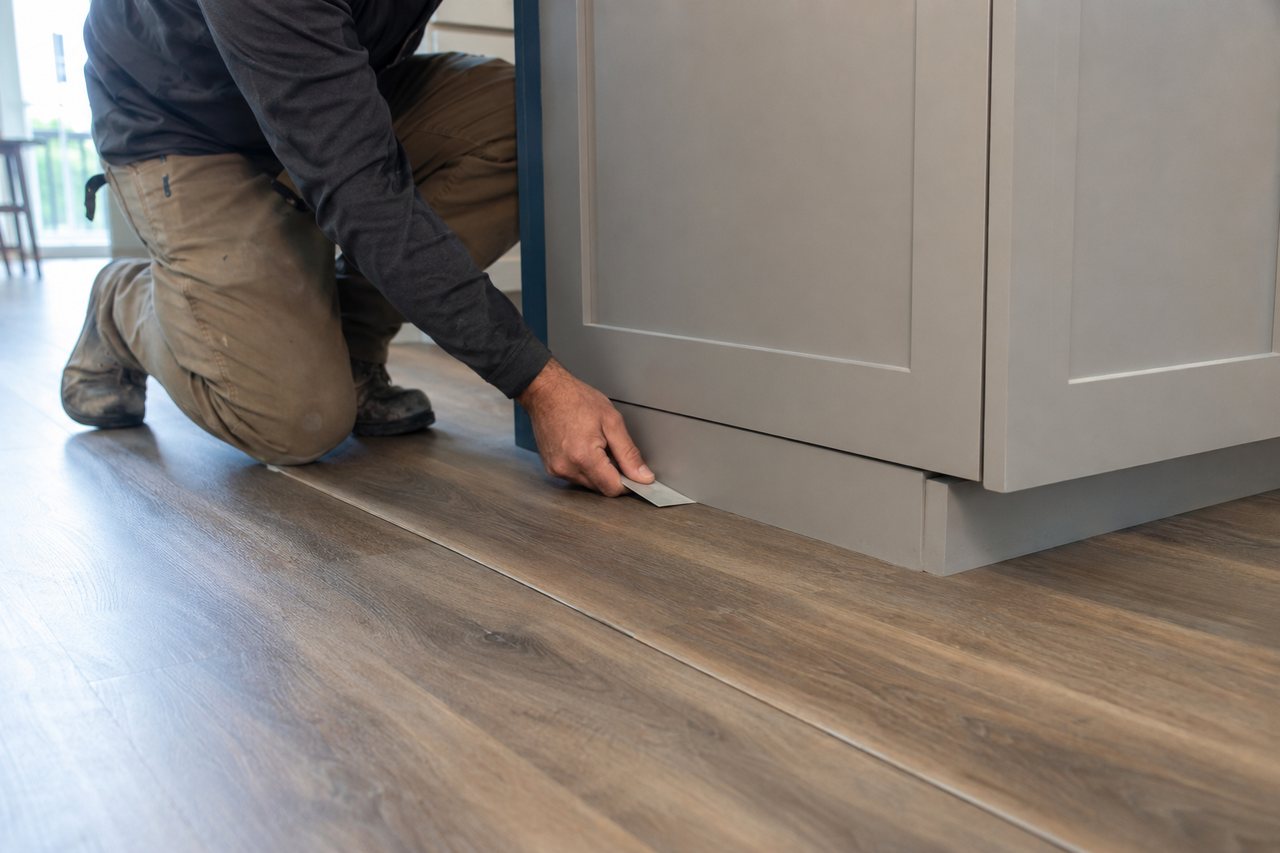
The floor must be separated from the fixed structure.
In some installations, a professional can create a manufacturer-compliant clearance beneath the toe kick and cover it with trim.
More extensive installations may require lifting nearby planks or removing part of the floor.
Do not cut blindly around cabinetry. Plumbing, electrical wiring, and cabinet supports may be concealed behind the toe kick.
3. Direct Sunlight or Excessive Heat Has Distorted the Planks
Large windows can create much higher floor-surface temperatures than the room thermostat suggests.
Dark planks often absorb more solar heat than lighter finishes.
Rigid-core products have defined service-temperature limits. For example, Mannington’s 2026 ADURA Rigid guide lists an occupied-use range of 55°F to 100°F.
It also places separate limits on radiant heating and extreme exposure. Those limits apply to that product, so another manufacturer may specify different values.
Prolonged heat can expand a trapped floating floor. It can also distort flexible glue-down planks or weaken an adhesive bond.
Proven Fix
Stabilize the room before altering the floor.
Use blinds, curtains, or another suitable method to reduce intense solar heating.
Confirm that radiant-floor controls remain within the flooring manufacturer’s limit.
Once the heat source is controlled, release any restricted expansion areas. Replace planks that remain curled, creased, or dimensionally distorted.
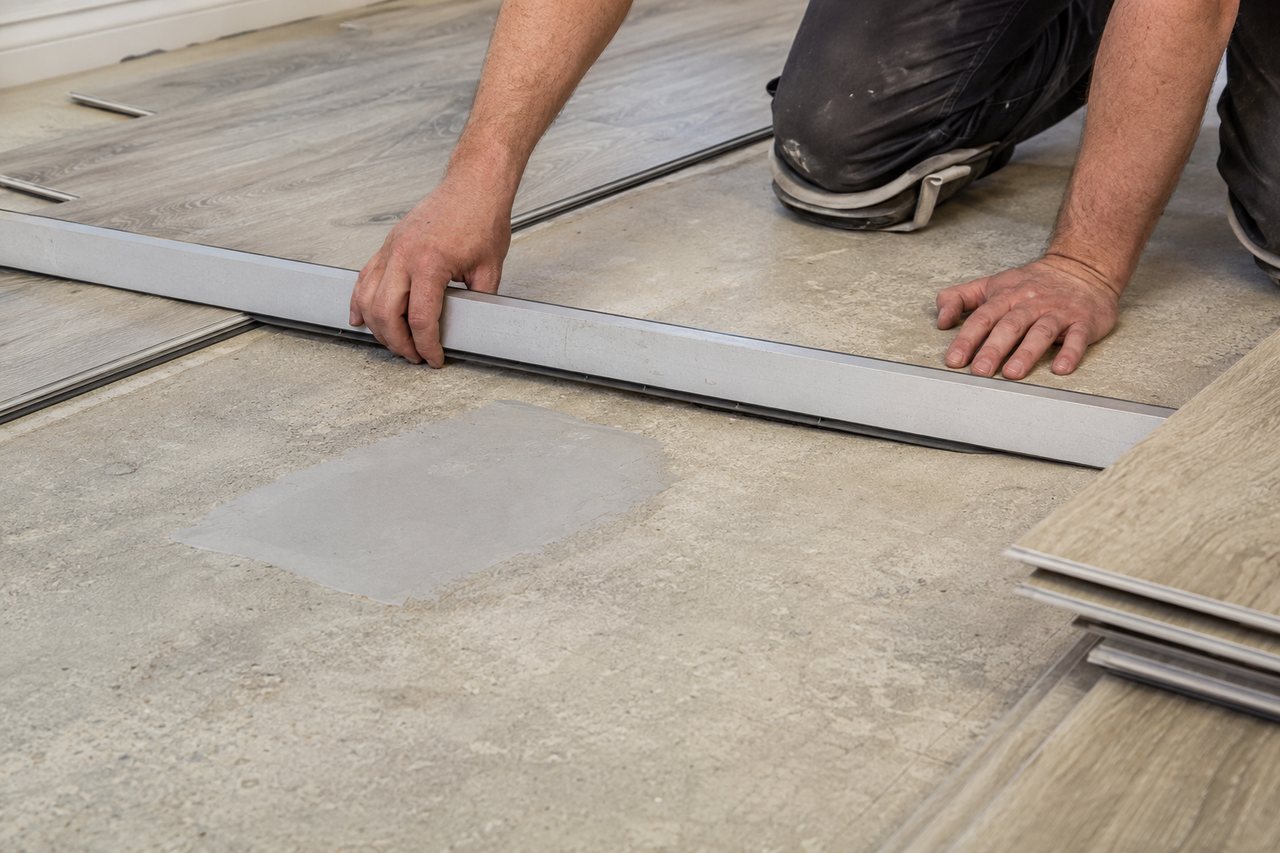
4. The Subfloor Is Not Flat Enough
Waterproof flooring still needs a flat, structurally sound base.
A rigid plank can bridge a shallow depression, but repeated foot traffic forces the plank downward. This movement stresses the tongue-and-groove profile.
High spots create a different problem. They act as fulcrums beneath the plank, causing rocking, lifted joints, and eventual locking-system failure.
The 2026 Mannington rigid-core instructions require subfloors to be flat within 3/16 inch over 10 feet and 1/32 inch over 12 inches.
Its guidance references ASTM F710 for concrete preparation.
Proven Fix
The affected flooring usually needs to be lifted.
High areas may require approved grinding methods. Low areas normally require a compatible cementitious patch or leveling compound.
Do not inject random adhesive, foam, or caulk beneath a floating plank.
Those materials can create hard pressure points, restrict movement, and complicate later repairs.
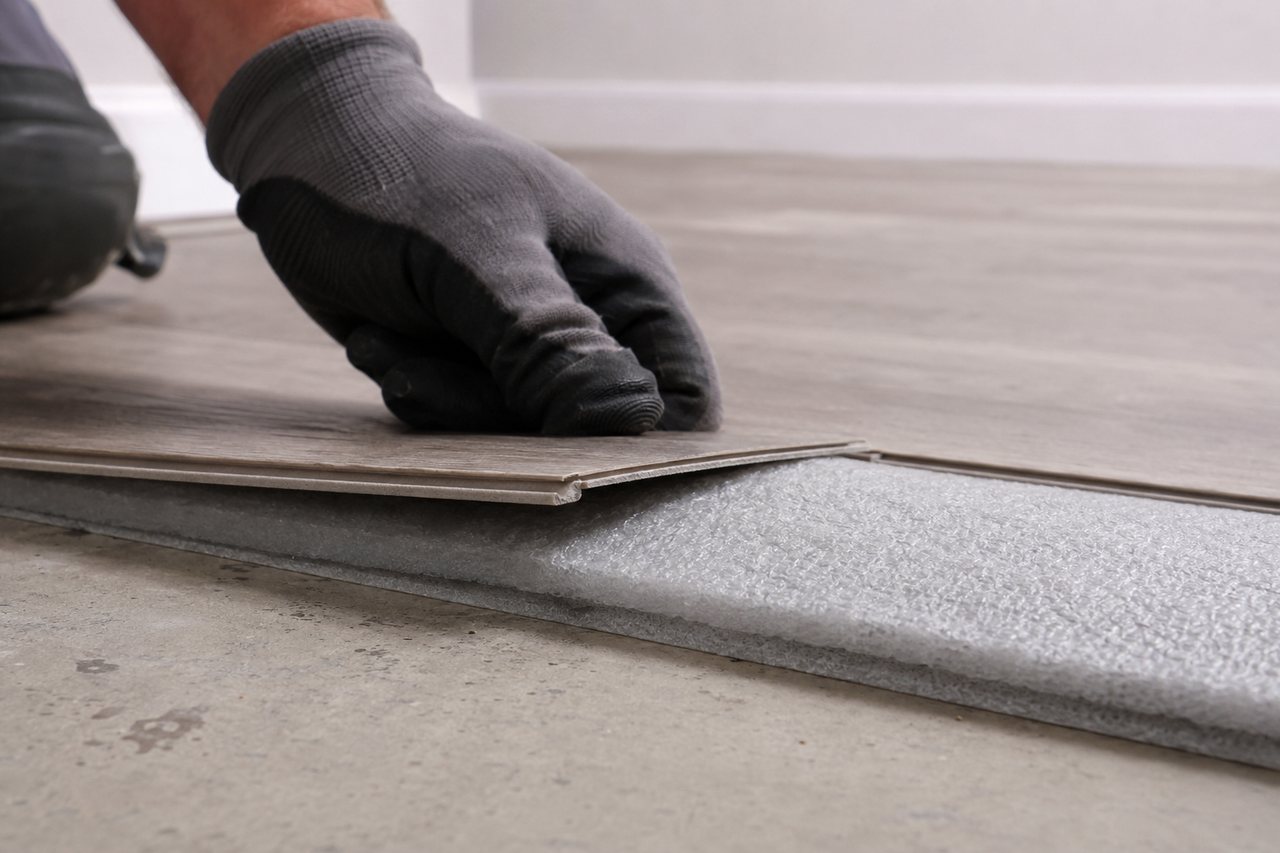
5. The Wrong Underlayment Is Compressing Beneath the Floor
Many rigid-core products already include an attached pad. Adding another soft layer can allow excessive vertical movement.
That movement may not be obvious immediately. Over time, foot traffic can flex the joints until they separate, crack, or lift.
Both Mannington’s ADURA Rigid and ADURA Max guides state that their attached-pad products should not receive an additional pad.
Other products may permit approved acoustic underlayments, so the carton instructions must control the decision.
Proven Fix
Confirm the exact flooring model and underlayment beneath it.
If the installed underlayment is not approved, the dependable repair is to lift the floor, remove the unsuitable layer, and reinstall the planks over a compliant substrate.
Broken click-lock planks should be replaced during the process.
6. Moisture Is Affecting the Subfloor or Adhesive
“Waterproof” describes the flooring material. It does not mean the entire floor assembly is immune to moisture problems.
Water can become trapped beneath LVP after a plumbing leak, appliance failure, or slab-moisture issue.
The vinyl may survive, while plywood, oriented strand board, or patching materials swell underneath it.
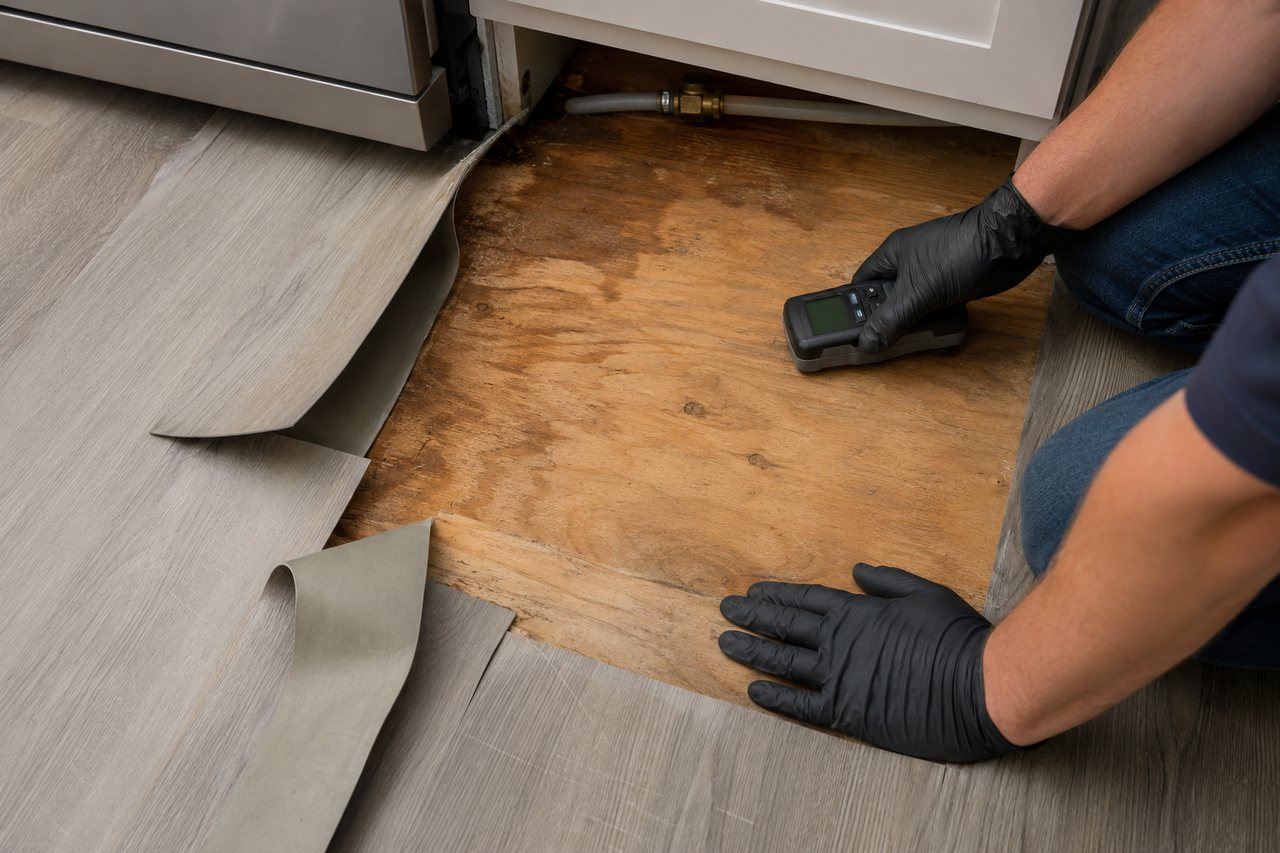
Concrete moisture can also affect adhesives and promote mold beneath floating flooring.
Current ASTM resilient-flooring standards include:
- ASTM F710 for concrete preparation
- ASTM F2170 for in-situ relative-humidity testing
- ASTM F1869 for calcium-chloride moisture testing
Manufacturer limits vary.
Mannington’s 2026 rigid-core instructions, for example, list maximum results of 8 pounds per 1,000 square feet per 24 hours under ASTM F1869 or 85 percent relative humidity under ASTM F2170.
Proven Fix
Stop the water source before repairing the floor.
The substrate must then be inspected, tested, and dried.
Swollen wood panels, loose patching, and damaged adhesive must be corrected rather than covered.
Where concrete readings exceed the product or adhesive limit, a qualified flooring professional may recommend additional drying or an ASTM F3010-compliant moisture-mitigation system.
7. The Glue-Down Adhesive Has Lost Its Bond
Glue-down planks can lift when the adhesive does not transfer correctly to the backing.
Common causes include:
- Installing into adhesive that is too wet or too dry
- Using the wrong trowel notch
- Failing to roll the installation
- Dust, paint, or curing compounds on the substrate
- Excessive slab moisture
- Moving heavy furniture before the adhesive cures
- Heat exposure beyond the product limit
These requirements are highly product-specific.
Mannington’s 2026 ADURA Flex guide, for example, specifies approved adhesives, defined trowel sizes, controlled open time, and rolling with a minimum 75-pound three-section roller.
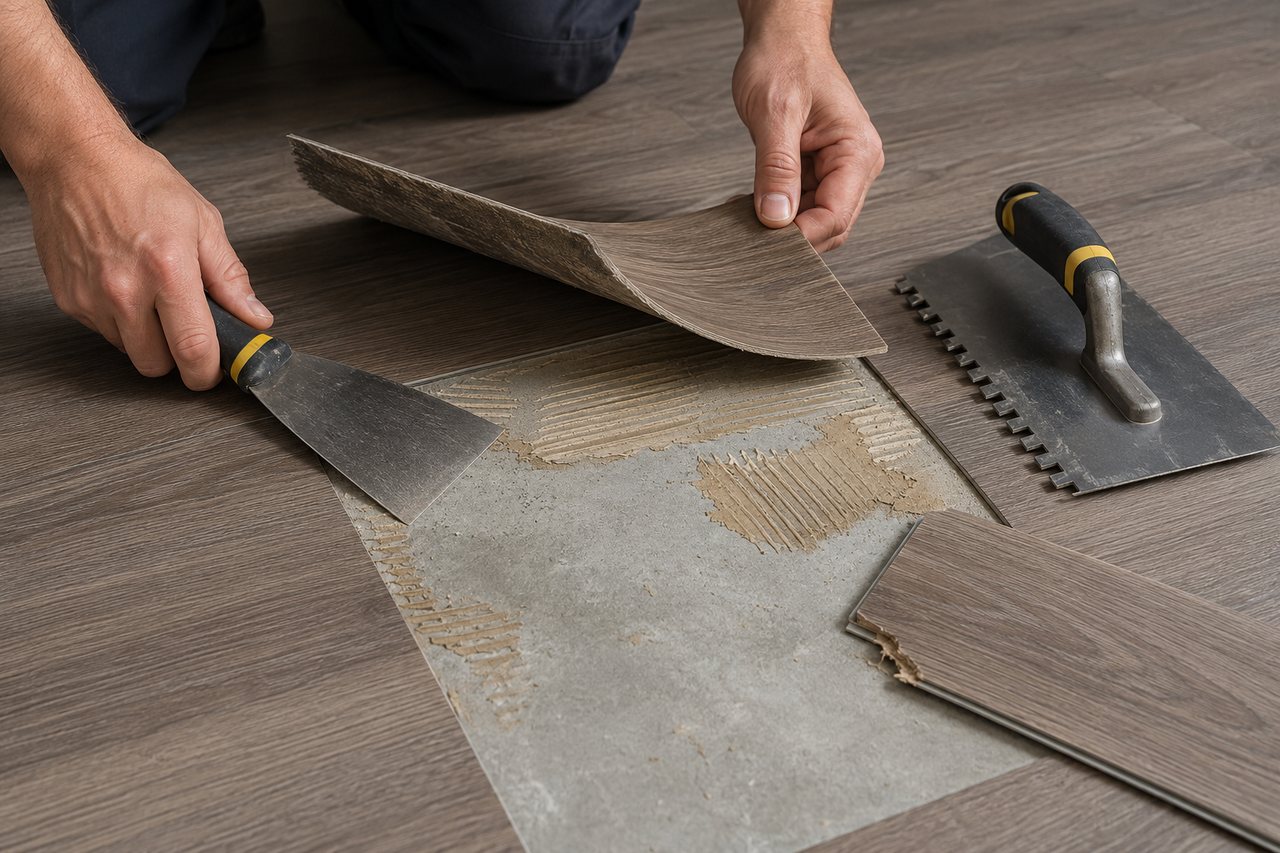
Proven Fix
An isolated loose plank can often be removed without replacing the surrounding floor.
The substrate must be cleaned and flattened before the replacement plank is bonded with the approved adhesive.
Widespread bond loss requires a broader investigation because repeated spot repairs will fail if moisture or substrate contamination remains.
8. The Locking System Is Already Damaged
A floor can remain raised after the original pressure has been removed.
Once a click profile cracks, curls, or loses its shape, the joint may no longer hold the planks flat.
Dragging appliances, using narrow furniture feet, or rolling heavy loads directly across the floor can add further stress.
Current manufacturer guidance recommends moving appliances over hardboard runways and supporting heavy furniture with wide-bearing protectors.
Proven Fix
Replace every plank with a visibly broken locking edge.
A damaged plank near a wall may be reached by disassembling the rows. A central plank may require a manufacturer-approved cut-out repair.
Keep spare planks in a climate-controlled space.
Matching the exact color, embossing, and locking profile becomes difficult after a product is discontinued.
How to Diagnose Buckling Without Making It Worse
Start with the installation method.
A floating floor usually moves as a connected field. Glue-down failures are more likely to appear as isolated loose planks, curled corners, or hollow areas.
Next, check:
- Whether the buckle appeared during hot weather
- Whether a leak or appliance failure occurred
- Whether cabinets or islands sit on the floor
- Whether trim fasteners pass through the planks
- Whether the floor feels hollow, springy, or uneven
- Whether the perimeter has the required clearance
- Whether an extra underlayment was installed
Do not screw the buckle down. Do not place permanent heavy weights over it.
Both methods suppress movement without correcting the cause.
If repairs expose older flooring or black asphalt-type adhesive, stop before sanding or scraping.
Older resilient materials and adhesives may contain asbestos. Treat unknown material as potentially asbestos-containing until it has been properly assessed.
Can Buckled Vinyl Plank Flooring Flatten Itself?
A slightly raised floating floor may settle after heat is reduced and trapped edges are released.
This only works when the planks and locking joints remain undamaged.
A permanently bent plank, crushed core, or broken click profile will not repair itself.
The affected pieces must be replaced after correcting the underlying cause.
When Full Replacement Makes More Sense
Localized repair is reasonable when the problem involves a few replaceable planks and the substrate remains sound.
Broader replacement is usually more economical when:
- Locking joints have failed across several rows
- Moisture has damaged a large wood subfloor area
- Adhesive failure extends across the room
- The substrate remains outside moisture limits
- The floor is trapped beneath several permanent structures
- The original plank is unavailable
- An unapproved underlayment covers the entire installation
Vinyl plank cannot be refinished like hardwood.
Its lifecycle cost depends heavily on whether matching replacement planks remain available and whether the original subfloor was prepared correctly.
A thicker wear layer may extend the usable surface life in a busy kitchen or commercial space. It will not extend the life of a floor installed over an unstable substrate.
What Has Changed in 2026?
As of 2026, the core principles for preventing and correcting vinyl plank flooring buckling remain consistent.
Installers must control movement, prepare a flat substrate, test moisture, and follow product-specific temperature limits.
Recent standards continue to refine resilient-flooring performance and substrate evaluation.
ASTM currently lists updated specifications for rigid polymeric-core flooring and revised practices for underlayments and moisture-mitigation systems.
Certifications such as RFCI’s ASSURE program also address rigid-core quality, indoor-air emissions, heavy metals, and ortho-phthalates.
These certifications improve product screening, but they do not compensate for a trapped floating floor or poor subfloor preparation.
Frequently Asked Questions
Why is my vinyl plank flooring buckling?
Vinyl plank flooring usually buckles because a floating floor lacks expansion space, is trapped beneath fixed objects, or has been exposed to excessive heat.
Uneven subfloors, unapproved underlayment, moisture problems, and adhesive failure can produce similar raised areas.
Can water cause vinyl plank flooring to buckle?
Water does not normally swell the vinyl itself, but it can damage the materials beneath it.
Wet plywood may expand, while excessive slab moisture can weaken adhesive or support mold growth. The water source and substrate condition must be corrected before reinstalling the floor.
How do you fix buckled click-lock vinyl flooring?
First, release trapped edges and restore the expansion gap specified by the manufacturer.
Correct any heat, moisture, or subfloor problem. Allow undamaged planks to settle, then replace pieces with cracked locks, crushed edges, or permanent distortion.
Does thicker vinyl plank resist buckling?
Not necessarily. Overall construction and core stability matter more than wear-layer thickness.
The wear layer protects against surface abrasion. It cannot prevent buckling caused by restricted expansion, excessive heat, uneven subfloors, or broken locking joints.
Can floating vinyl flooring go under kitchen cabinets?
Many manufacturers prohibit installing permanent cabinets or islands over floating vinyl flooring.
The weight can prevent the floor from expanding and contracting. Install the cabinets first, then place the flooring around them with the product’s required clearance.
Is vinyl plank buckling covered by warranty?
Coverage depends on the documented cause and warranty terms.
Product defects may qualify, but manufacturers commonly exclude failures caused by inadequate expansion space, improper subfloor preparation, excessive moisture, extreme heat, or failure to follow installation instructions.


