
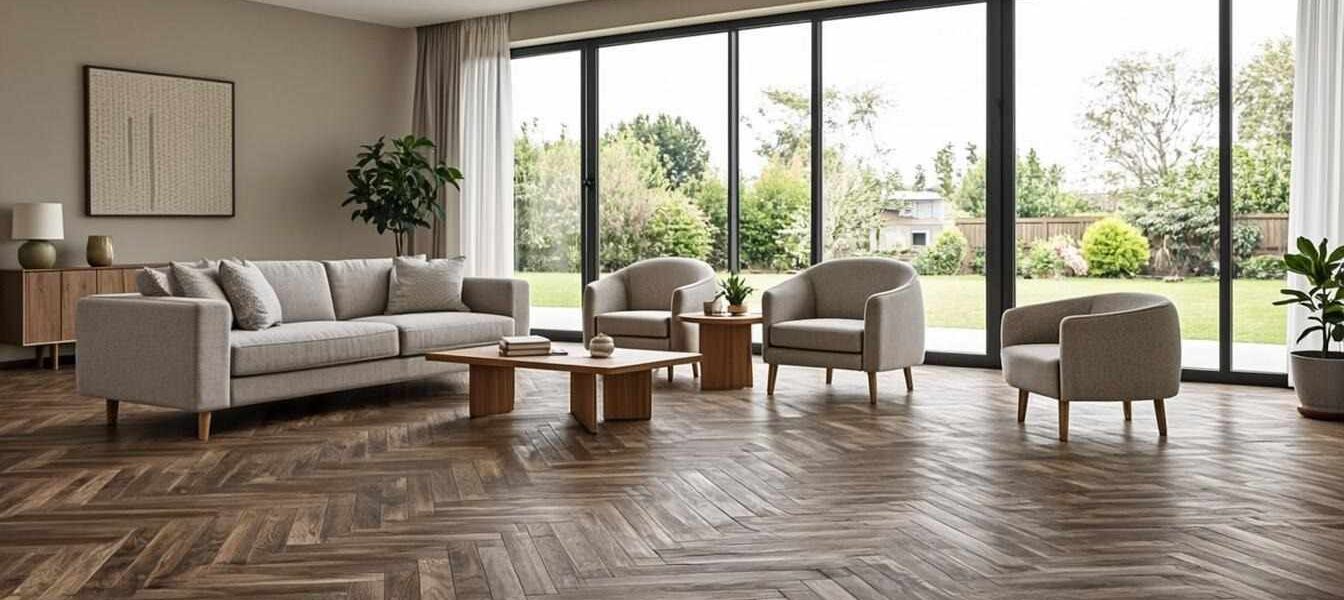
After a decade on job sites, watching homeowners wrestle with warped hardwood, cracked tile grout, and swollen laminate edges, one thing is crystal clear: waterproof vinyl flooring has fundamentally changed how we think about residential floors. In 2026, it is no longer a budget compromise — it is the fastest-growing category in the $28 billion global vinyl flooring market.
This guide cuts through the marketing noise. Whether you are comparing SPC versus WPC, trying to decode wear layer thickness, or figuring out if your kitchen and bathroom can actually survive daily life with vinyl plank, you will find straightforward, installation-tested answers here.
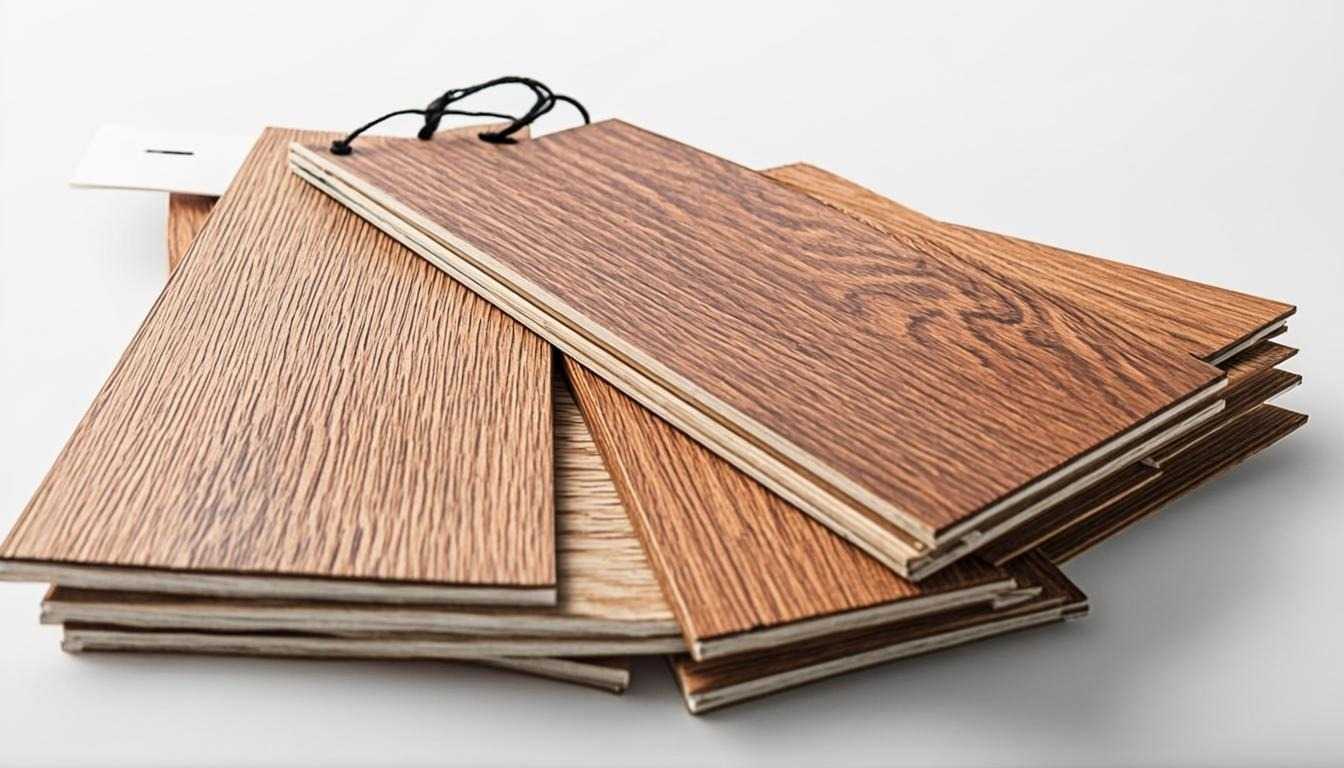
Quick Facts: Waterproof Vinyl Flooring at a Glance
| Feature | Details |
|---|---|
| Material Type | SPC, WPC, Rigid Core Vinyl Plank & Tile |
| Waterproof | Yes — 100% waterproof from top to bottom |
| Best For | Kitchens, bathrooms, basements, pet-friendly homes |
| Wear Layer | 12 mil (residential) to 20 mil (commercial/heavy use) |
| Cost (Materials) | $1 – $7 per sq. ft. depending on thickness and brand |
| Installed Cost | $3.50 – $9 per sq. ft. (professional installation) |
| Lifespan | 15 – 25 years with proper care |
| Top Brands (2026) | COREtec, Mohawk, Shaw, Armstrong, LifeProof, Pergo |
| Installation | Click-lock floating, glue-down, peel & stick |
| Pet-Friendly | Yes — scratch-resistant options available (SPC preferred) |
TLDR: What You Need to Know Right Now
Waterproof vinyl flooring in 2026 delivers hardwood-level visuals with complete moisture protection, making it the smartest all-around pick for kitchens, bathrooms, basements, and homes with pets. Rigid core options — specifically SPC (Stone Plastic Composite) and WPC (Wood Plastic Composite) — dominate the market, with SPC leading at roughly 46% of rigid-core sales thanks to its superior dent resistance and dimensional stability.
The single most important spec to check is wear layer thickness: aim for at least 12 mil for residential use and 20 mil if you have large dogs, heavy foot traffic, or commercial-grade expectations. Expect to pay $1 to $7 per square foot for materials and $3.50 to $9 per square foot fully installed, with a realistic lifespan of 15 to 25 years.
Understanding Waterproof Vinyl Flooring Today
Waterproof vinyl flooring is not a single product — it is an entire category built around one non-negotiable feature: water cannot penetrate the planks. Unlike traditional hardwood or laminate, where moisture seeps into seams and swells the core, modern vinyl planks are engineered with waterproof cores, tight click-lock systems, and factory-sealed edges.
The global vinyl flooring market recently surpassed $28 billion, with the luxury vinyl plank segment alone valued at $9.43 billion and growing at nearly 7% annually. That growth is not driven by marketing budgets — it is driven by performance. Homeowners see results.
In recent years, the most significant shift is toward wider planks (7 inches and above), herringbone and chevron pattern options, and embossed-in-register (EIR) texturing that makes the surface feel like real wood grain underfoot. Warm greige and coastal tones have overtaken cool grays as the dominant color trend.
SPC vs WPC: Which Rigid Core Should You Choose?
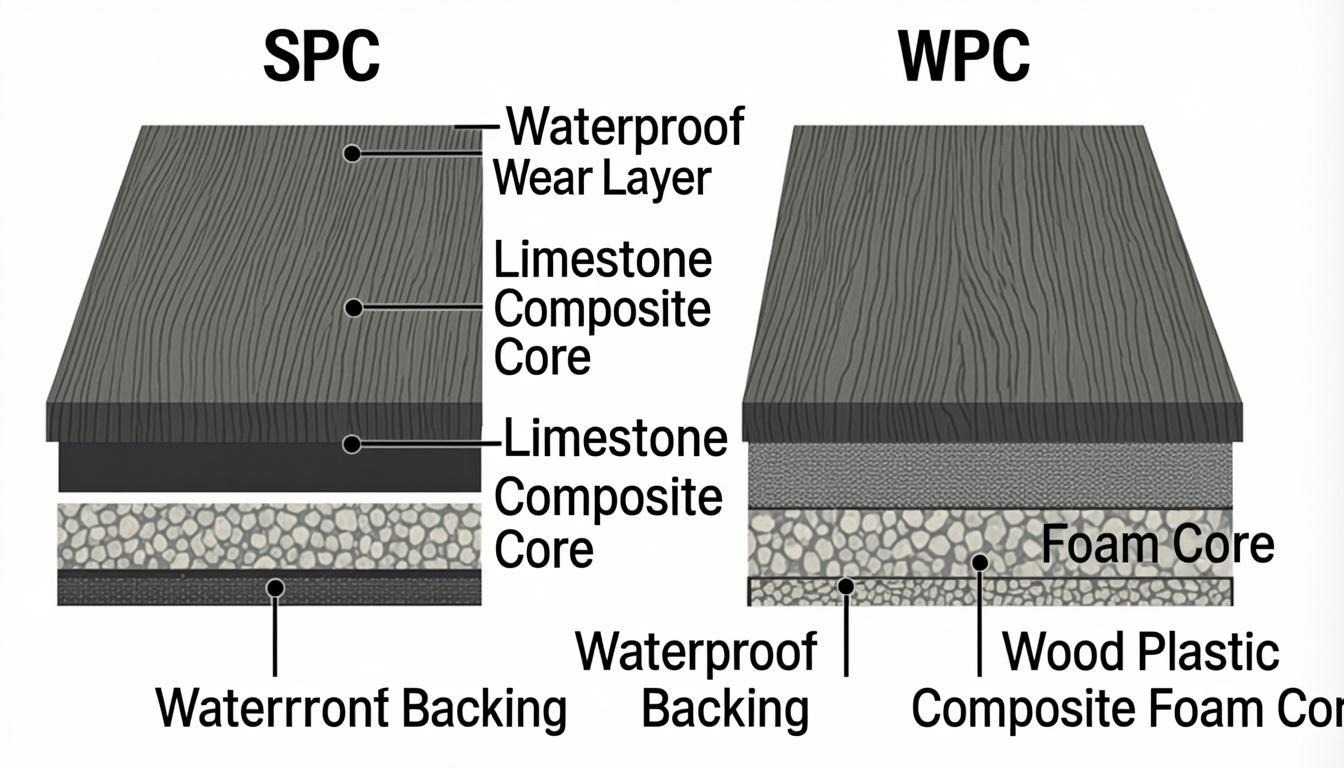
This is the decision that trips up most homeowners. Both SPC and WPC are rigid core vinyl floors, meaning they do not flex like older flexible vinyl sheets. But their internal construction is fundamentally different, and that difference shows up in real-world performance.
SPC Flooring (Stone Plastic Composite)
SPC uses a dense core made from limestone powder mixed with PVC and stabilizers. The result is an extremely rigid, thin plank — typically 4mm to 6.5mm — that resists dents, holds flat over uneven subfloors, and handles temperature fluctuations without expanding or contracting.
On job sites, I have seen SPC planks dropped, dragged, and walked on immediately after installation with zero damage. That density makes it my first recommendation for kitchens (where heavy appliances get moved) and homes with large dogs. Pricing runs $2 to $6 per square foot for materials.
WPC Vinyl Flooring (Wood Plastic Composite)
WPC replaces limestone with wood pulp fibers blended into a PVC foam core. The plank is thicker — usually 5.5mm to 8mm — and noticeably softer underfoot. It feels warmer, absorbs sound better, and gives a slight cushion that homeowners often prefer in bedrooms and living areas.
The trade-off is dent resistance. WPC will show indentations from heavy furniture over time in ways that SPC typically does not. It also costs about 10-20% more. For bathrooms, however, the added comfort under bare feet is a genuine quality-of-life upgrade that justifies the premium.
Wear Layer Thickness: The Number That Actually Matters
Most shoppers focus on total plank thickness, but the wear layer — that transparent urethane coating on top — is what determines how long your floor actually lasts. I have seen 8mm planks with 6-mil wear layers fail in five years while 4mm SPC with a 20-mil wear layer holds strong for two decades.
Here is the practical breakdown from my installation experience. A 6-mil wear layer suits light-traffic areas like guest bedrooms. The 12-mil range is the residential sweet spot, offering 8 to 12 years of solid performance in family homes. The 16 to 20-mil range is what you want for active households with pets, kids, or high-traffic zones like kitchens and entryways.
A 20-mil commercial-grade wear layer can realistically deliver 15 to 25 years of service. The wear layer is the one spec where spending more directly correlates with longer life. Do not cut corners here.
Installation Methods That Work in the Real World
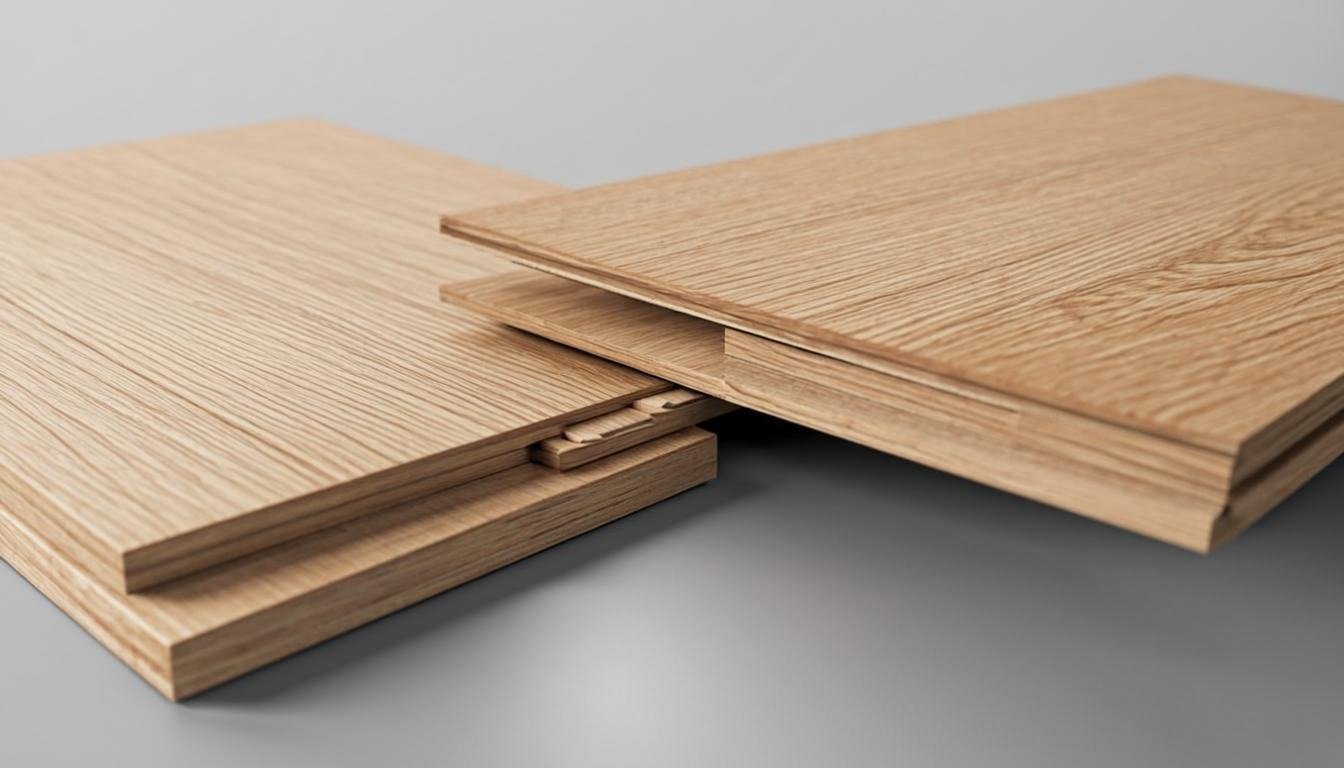
Click-lock floating installation dominates residential projects today. The planks interlock along their edges and sit on top of your subfloor without glue or nails. It is fast (a skilled DIYer can finish 500 square feet in a weekend), reversible, and allows the floor to naturally expand and contract.
Peel-and-stick vinyl is a separate category entirely. It works for small spaces, temporary updates, and tight budgets, but I have removed enough failed peel-and-stick installations to know its limits. It is vulnerable to temperature shifts, subfloor imperfections, and moisture underneath the adhesive.
Vinyl plank with attached underlayment simplifies installation and saves $0.50 to $1.50 per square foot. However, most manufacturers prohibit adding a second underlayment layer, so you are locked into whatever acoustic performance the factory pad provides.
Bathroom & Kitchen Vinyl Flooring: Practical Considerations
Kitchens and bathrooms are the two rooms where waterproof vinyl flooring delivers the most obvious value. Standing water, steam, spills, and humidity are non-issues for any quality vinyl plank with sealed edges.
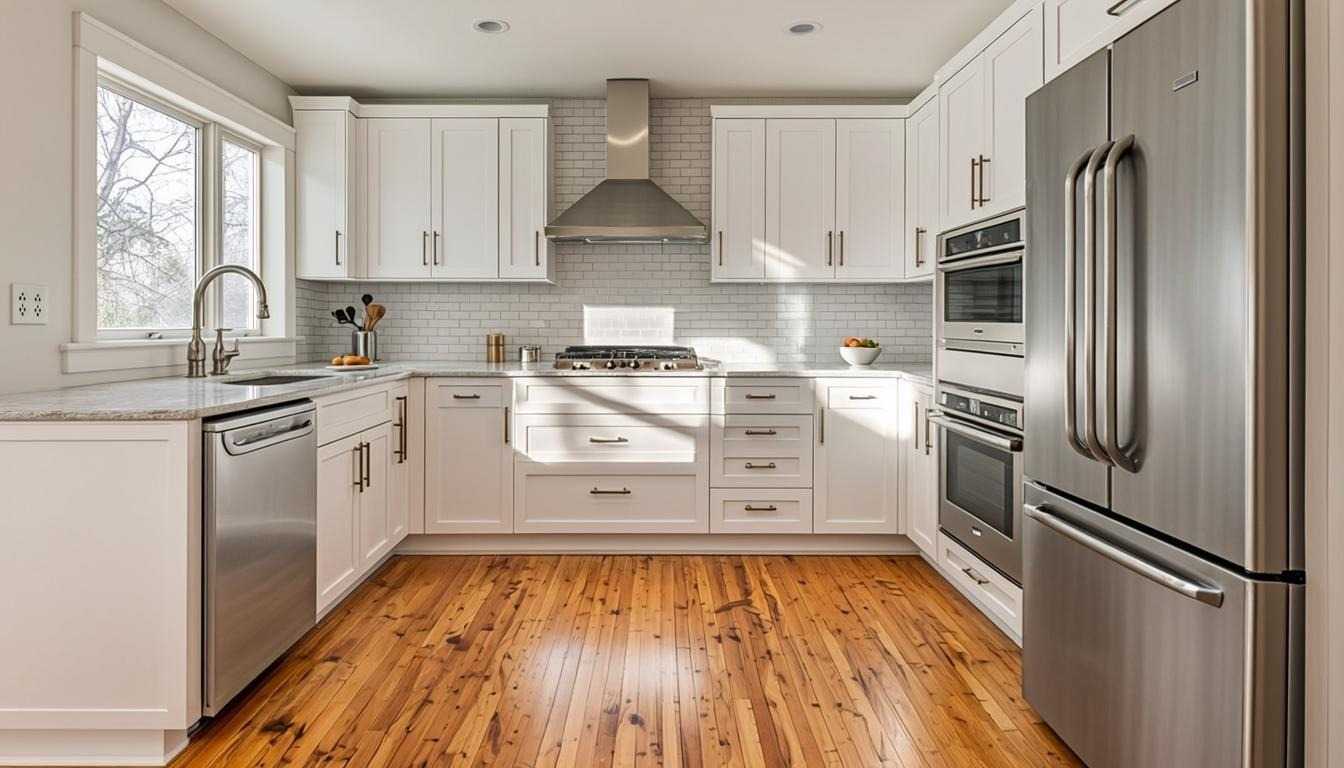
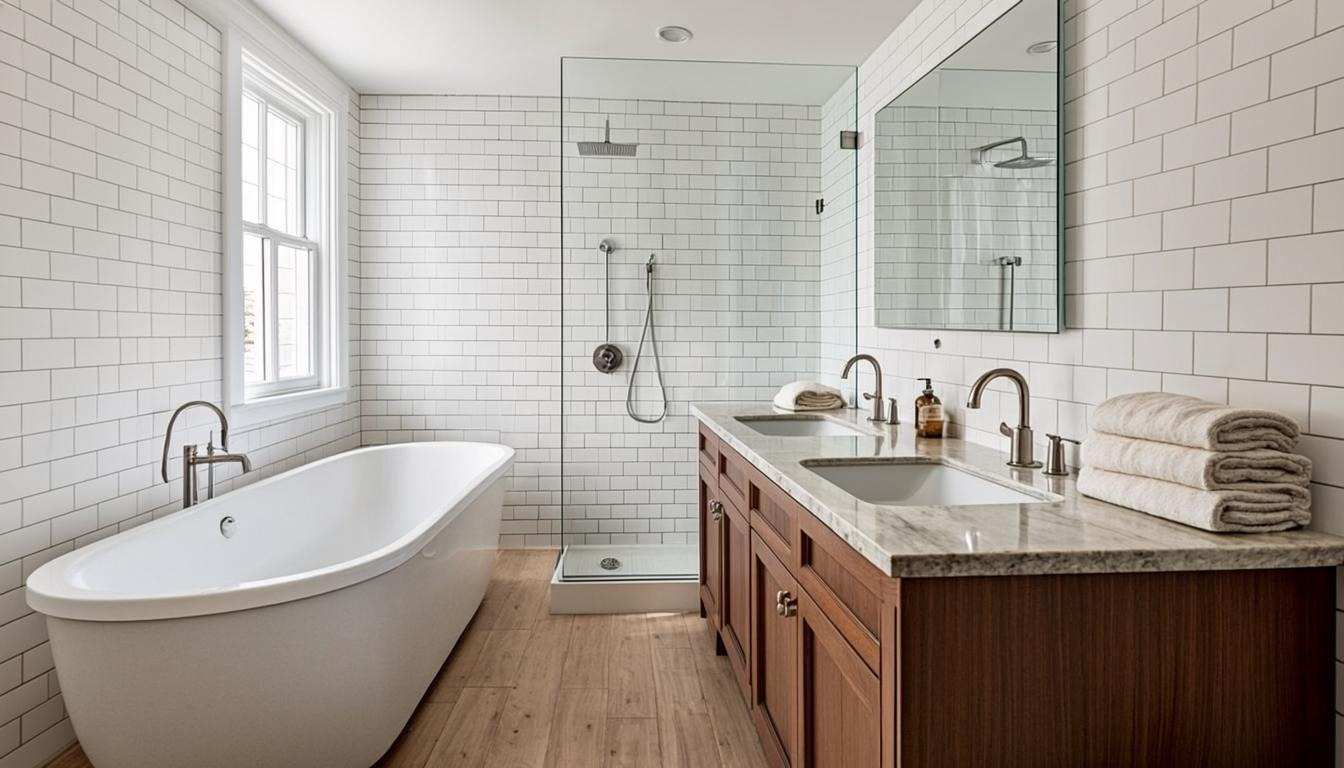
For kitchens, I recommend SPC with a minimum 16-mil wear layer. Kitchen foot traffic is heavy, appliances get dragged, and dropped objects are common. The density of SPC handles all of this without showing wear. In bathrooms, WPC is worth considering for its softer feel under bare feet, but always use a vapor barrier over concrete subfloors to prevent moisture migration from below.
Pet-Proof & Scratch-Resistant Vinyl Floors
If you have dogs, the combination of SPC core plus a 20-mil wear layer is the most durable residential setup available today. Brands like Mohawk PetGuard, Armstrong SolidTech R, LifeProof, and Pergo Extreme have dedicated pet-focused lines with enhanced scratch and stain resistance built into the wear layer.
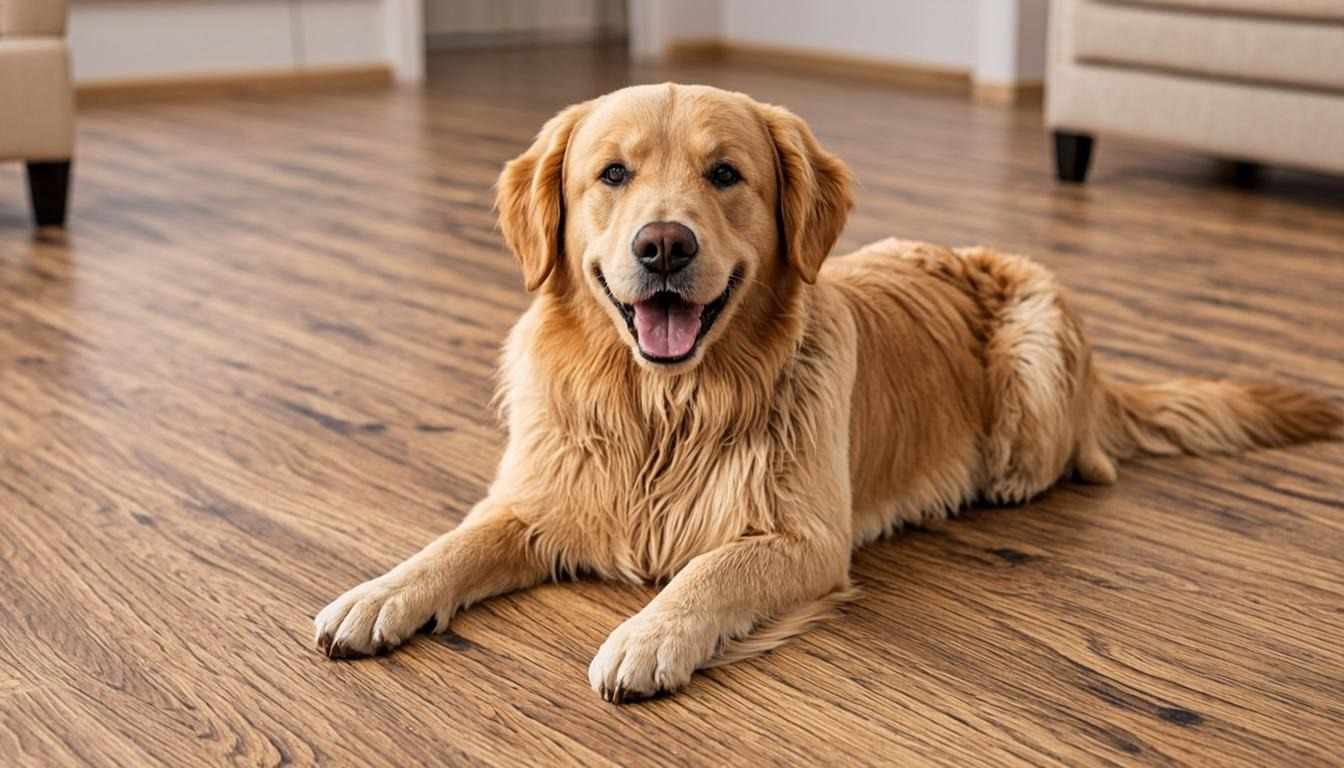
No floor is completely scratch-proof. Dog nails will eventually leave marks on any surface. But premium vinyl with a thick wear layer and embossed texture hides minor scratches far better than smooth surfaces. The texture creates visual noise that naturally disguises wear patterns.
Vinyl vs Laminate Flooring: An Honest Comparison
This debate keeps coming up, and the answer is clearer than ever. Vinyl wins on water resistance (100% waterproof versus water-resistant at best), pet friendliness, and overall lifespan of 15 to 25 years versus 10 to 20 years for laminate.
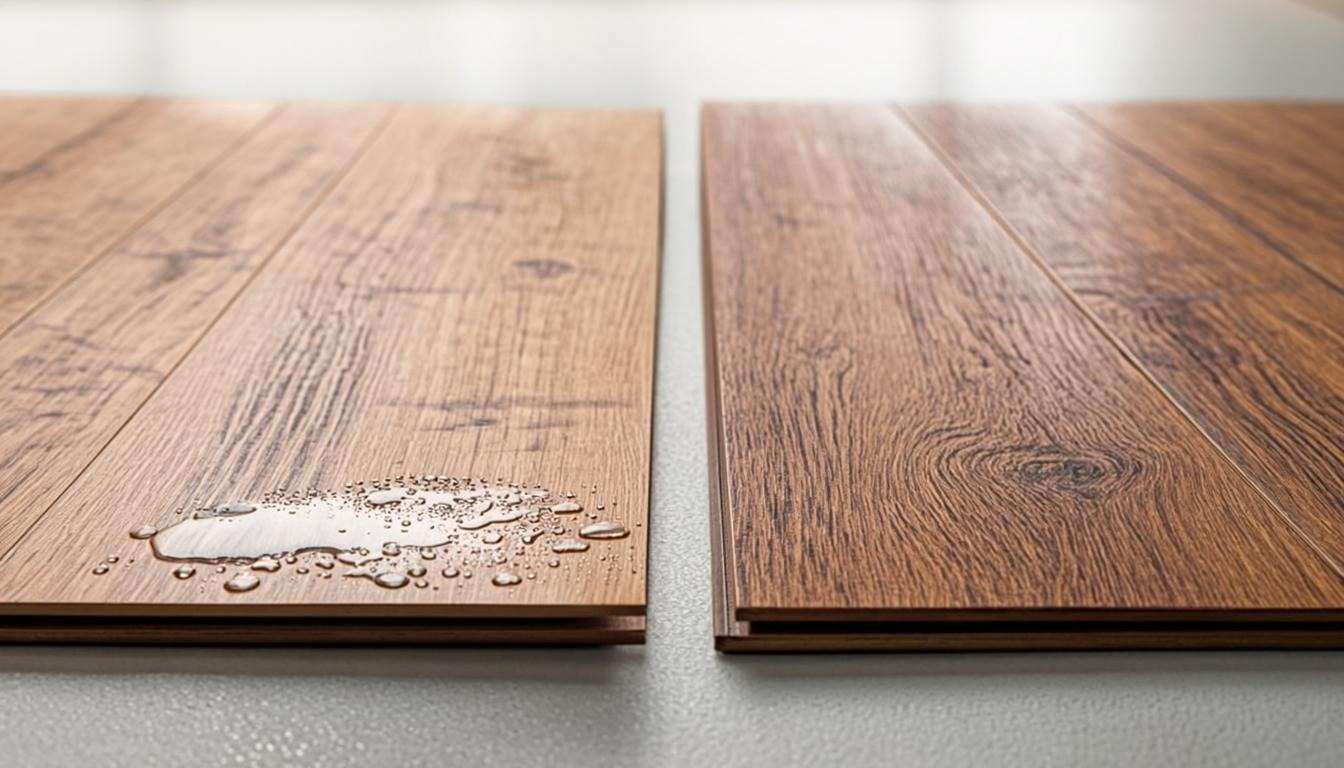
Laminate still holds an edge in scratch resistance and, in some cases, visual realism at lower price points. But waterproof laminate products are still evolving, and none currently offer the same core-level water protection that vinyl provides. For any room with moisture risk — kitchens, bathrooms, basements, laundry rooms — vinyl is the clear choice.
Frequently Asked Questions
Is all vinyl flooring waterproof?
No. Standard vinyl flooring may have a waterproof surface but a water-vulnerable core. True waterproof vinyl — like SPC and WPC — has a waterproof core, waterproof wear layer, and waterproof edges that lock together to prevent moisture from penetrating at any level.
Can I install vinyl plank over existing tile?
In most cases, yes — provided the existing tile is flat, well-bonded, and free of major cracks. Floating click-lock vinyl can go right over tile as long as you use a thin vapor barrier and the subfloor meets the manufacturer’s flatness specifications.
How long does waterproof vinyl flooring last?
With a quality wear layer (12 mil or above) and proper maintenance, expect 15 to 25 years. The 20-mil commercial-grade products in low-traffic residential settings have been known to exceed 25 years.
Is SPC or WPC better for bathrooms?
WPC offers more comfort underfoot and better sound absorption, which matters in bathrooms. SPC provides superior dent and impact resistance. Both are fully waterproof. For most homeowners, the comfort of WPC in a bathroom outweighs SPC’s extra hardness.
Can I install waterproof vinyl flooring myself?
Absolutely. Click-lock floating vinyl plank is the most DIY-friendly flooring option available. A competent homeowner can install 200 to 300 square feet in a single day. The main requirement is a clean, flat subfloor.
Does vinyl flooring increase home value?
Quality vinyl flooring in good condition can positively impact resale value, especially in markets where buyers prioritize low-maintenance, pet-friendly homes. It will not match the premium appeal of genuine hardwood, but it offers broader buyer appeal than carpet or aging laminate.


