I have removed enough flooring from homes across the country to know one thing for certain: the lifespan printed on the box is rarely the lifespan you get. After a decade of installing and inspecting floors, I have seen luxury vinyl plank that looks brand-new after fifteen years—and budget LVP that failed in three.
So, how long does LVP flooring really last? The honest answer falls between 10 and 25 years for residential installations, with the wear layer thickness and core construction being the two factors that matter most. In 2026, LVP technology has improved significantly, but the fundamentals have not changed: a thicker wear layer and a quality install still separate floors that endure from floors that disappoint.
TL; DR — LVP Flooring Lifespan at a Glance
LVP flooring lifespan in a typical home ranges from 10 to 25 years. Budget planks with a 6 mil wear layer last around 5 to 10 years in moderate traffic. Mid-range options with a 12 mil wear layer deliver 10 to 15 years of solid performance. Premium rigid core LVP with a 20 mil or thicker wear layer can reach 20 to 25 years—approaching the durability of laminate and, in some cases, rivaling entry-level hardwood. The wear layer thickness is the single most reliable predictor of longevity, followed by core construction quality and installation standards.
Quick Facts: LVP Flooring Lifespan by Category
| Factor | Typical Range | Key Detail |
|---|---|---|
| Average LVP Lifespan | 10 – 25 years | Depends on wear layer and core quality |
| Budget LVP (6 mil wear layer) | 5 – 10 years | Best for low-traffic areas |
| Mid-Range LVP (12 mil wear layer) | 10 – 15 years | Good for family homes |
| Premium LVP (20+ mil wear layer) | 15 – 25 years | Commercial-grade durability |
| Rigid Core (SPC/WPC) | 15 – 25 years | Superior dimensional stability |
| Hardwood (for comparison) | 30 – 100 years | Refinishable, higher upfront cost |
What Really Determines How Long Luxury Vinyl Plank Lasts?
Most homeowners focus on plank thickness when shopping, but that number tells you almost nothing about durability. I have seen 8mm LVP outperform 12mm products because the thinner plank had a superior wear layer and a denser core. Here is what actually moves the needle.
Wear Layer Thickness — The Single Biggest Factor
The wear layer is the transparent urethane or ceramic-bead coating on top of the decorative print layer. It is the only part of the plank that takes direct foot traffic, pet claws, and furniture movement. Measured in mils (one mil equals one-thousandth of an inch), this thin film does all the heavy lifting.
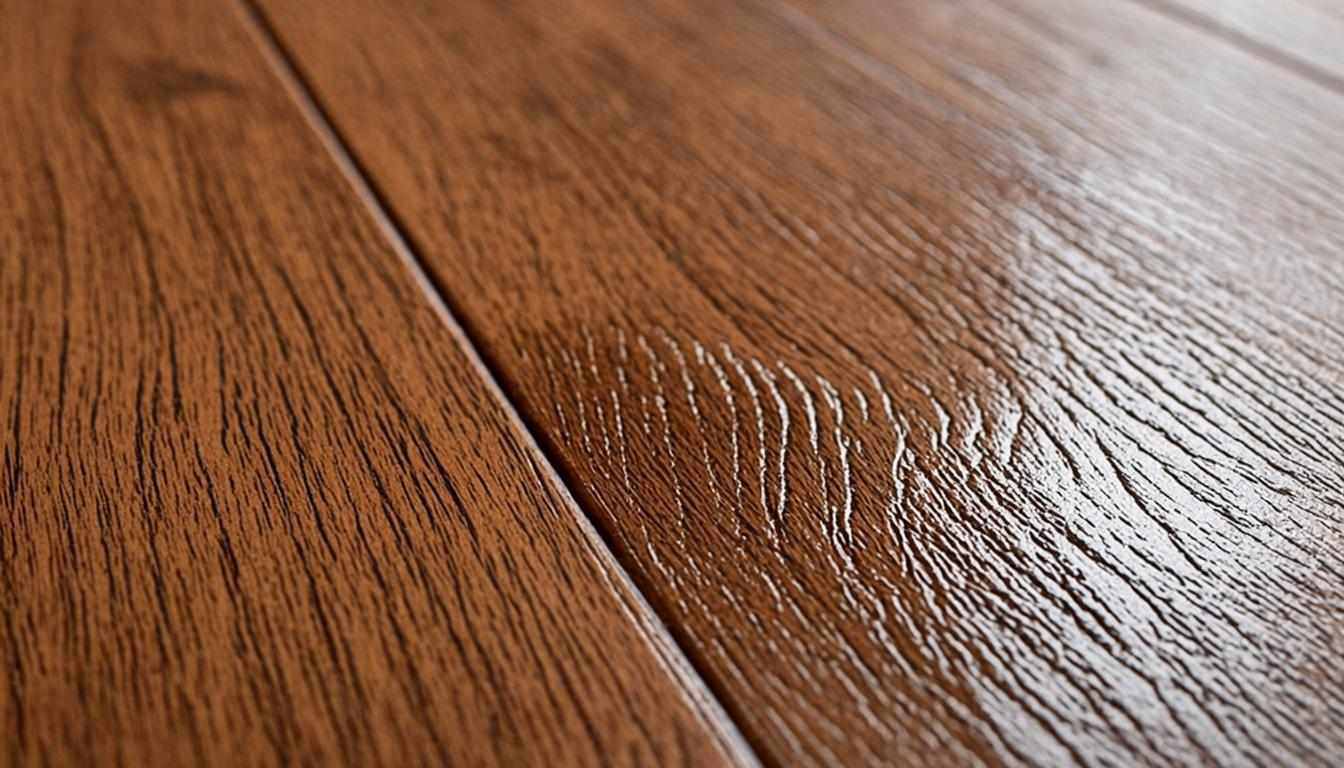
A 6 mil wear layer suits bedrooms but will show wear within 5 to 10 years in a busy household. Step up to 12 mil, and you get a decade or more in family spaces. Products with 20 mil or thicker wear layers can endure 15 to 25 years even under heavy use. In my experience, anything below 12 mil is a compromise for active homes with kids or large dogs.
Core Construction: SPC vs WPC and Why It Matters
The core beneath the wear layer determines how the plank handles structural stress—indentation from heavy furniture, expansion from temperature shifts, and water resistance at the seams. Stone Plastic Composite (SPC) cores use limestone and PVC for maximum rigidity. Wood Plastic Composite (WPC) cores incorporate wood flour for a softer, quieter feel underfoot.
SPC is my recommendation for concrete subfloors, radiant heating, or significant temperature swings. WPC works well upstairs where sound dampening matters more than extreme rigidity. Both outperform older flexible vinyl by a wide margin, which is why rigid core flooring life expectancy consistently ranks higher in real-world testing.
Installation Quality — Where Most LVP Fails Prematurely
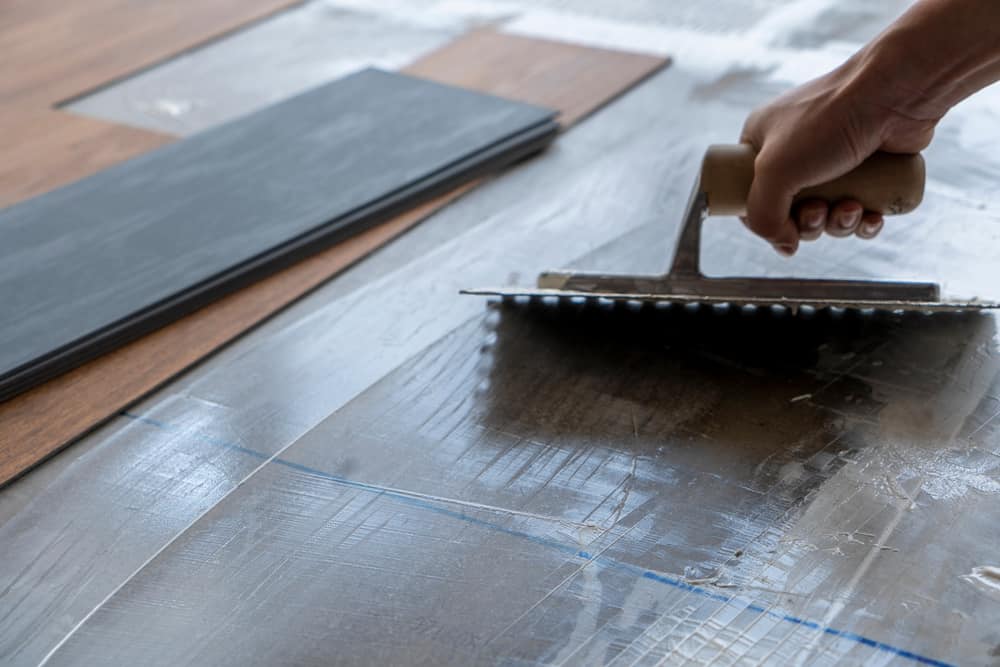
I cannot overstate this: a perfect product installed poorly will fail faster than a mediocre product installed correctly. The most common issues I see on replacement calls are uneven subfloors, inadequate expansion gaps that cause buckling, and click-lock seams that were not fully seated.
Glued-down installations tend to deliver slightly longer lifespans than floating floors because they eliminate seam separation. Floating installs with quality underlayment perform well when the subfloor is properly prepped. As of recent reports, the best LVP warranties now require certified installation—a sign that manufacturers know installation is where claims originate.
LVP vs Hardwood Longevity — Which Actually Lasts Longer?
This comparison comes up constantly, and the answer depends on what you mean by “last.” Solid hardwood can serve 30 to 100 years because it can be sanded and refinished. LVP cannot be refinished—once the wear layer is gone, the plank is done.
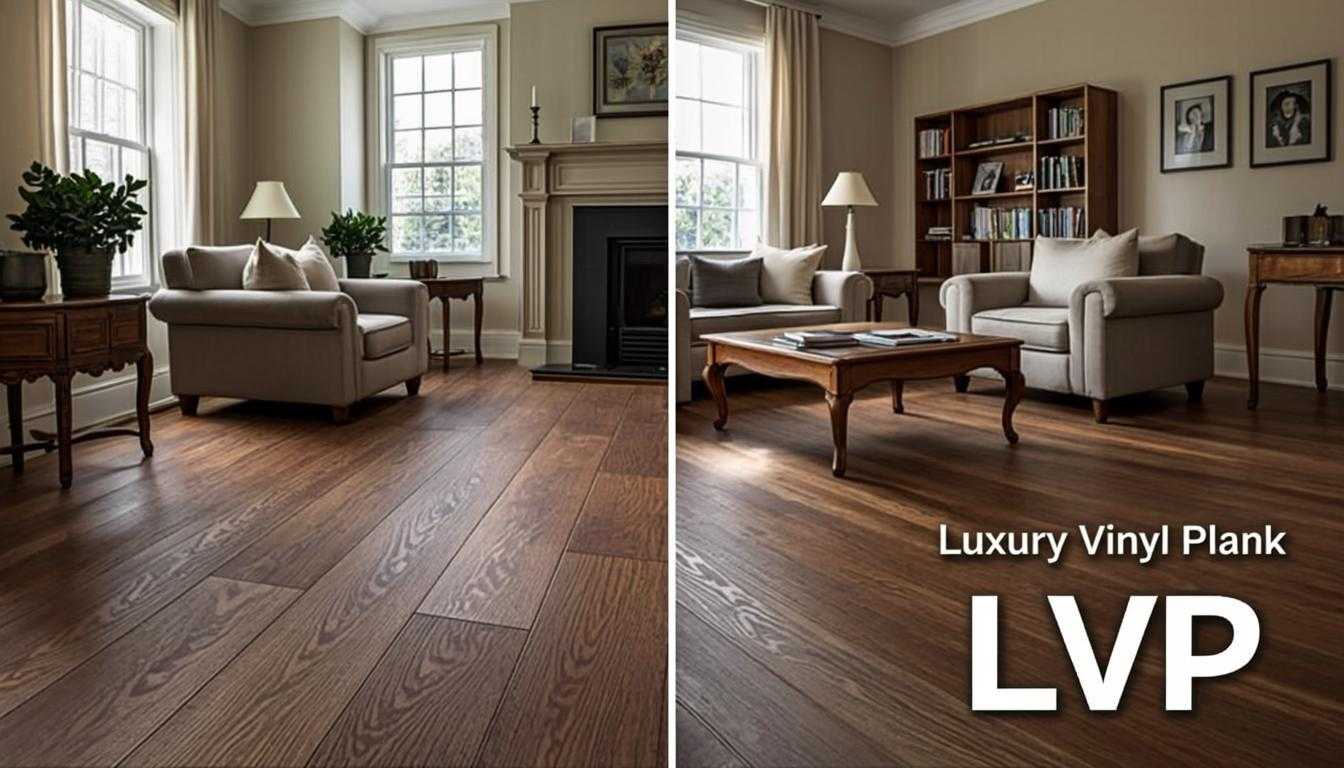
But here is the nuance most comparisons miss: hardwood requires significant ongoing investment to reach that 50-year mark. Refinishing costs $3 to $5 per square foot and creates disruption every 7 to 10 years. LVP requires only routine cleaning. For homeowners who want reliable performance without maintenance cycles, premium LVP at 20 to 25 years is genuinely competitive with hardwood’s total cost of ownership.
In humid climates—Florida coastal properties being a prime example—LVP often outlasts hardwood in practice because it handles moisture without cupping or warping. I have replaced water-damaged oak floors in beachfront homes where adjacent LVP remained perfectly intact.
Clear Signs Your LVP Flooring Needs Replacing
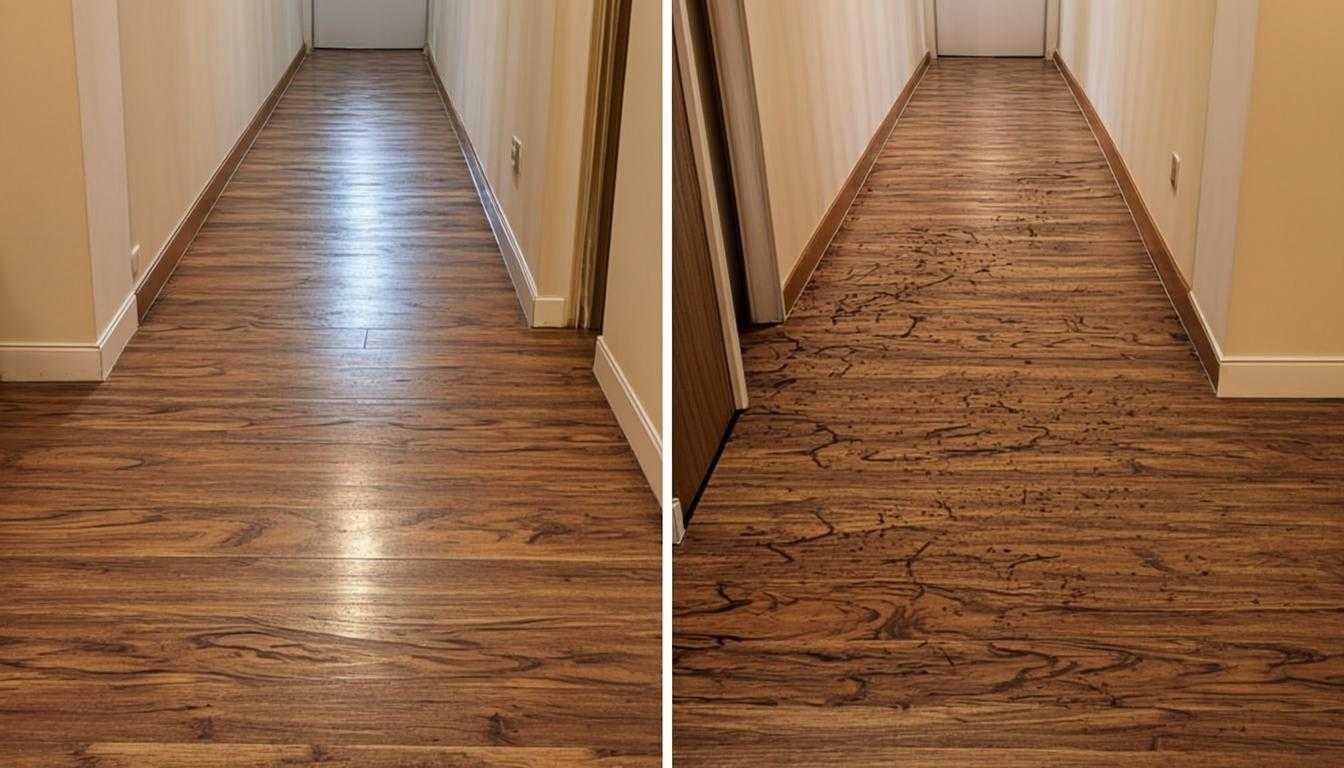
Wear layer deterioration: The surface looks dull or cloudy in high-traffic zones. This means the urethane wear layer has worn through—the floor’s protective shield is gone.
Seam separation and curling: Planks pulling apart or lifting at corners indicates moisture intrusion or subfloor movement. Once seams open, deterioration accelerates quickly.
Persistent staining or odor: Spills that have penetrated the core and caused discoloration or musty smells signal structural damage that surface cleaning will not resolve.
Softness underfoot: Spongy spots, especially near appliances, mean the core has compressed or degraded. This is irreversible and warrants replacement.
How to Extend Your Vinyl Plank Flooring Replacement Cycle
Getting maximum lifespan from LVP comes down to a few practical habits. First, use felt pads under all furniture legs and lift—never drag—heavy items. This eliminates the majority of scratches I encounter during inspections.
Second, place walk-off mats at every exterior entry. Grit tracked from outside acts like sandpaper on the wear layer and is the number one cause of premature wear in well-maintained homes. Third, clean spills promptly. While LVP is water-resistant, standing water at seams will eventually penetrate the core, especially with click-lock installations.
Maintaining indoor humidity between 30% and 50% also prevents the core from expanding and contracting excessively, which stresses click-lock seams. This matters most in regions with dramatic seasonal humidity swings.
Rigid Core Flooring Life Expectancy in 2026 — What Has Changed
The LVP market has matured considerably. Manufacturers now offer enhanced wear layers with aluminum oxide and ceramic-bead technology that show 30 to 40% better scratch resistance in third-party testing compared to products sold five years ago.
Attached acoustic underlayment is now standard on premium lines, eliminating a common earlier failure point. Waterproof core technology has also advanced, with some 2026 products offering seam-sealing adhesive systems that create near-impermeable barriers at plank joints.
That said, the fundamentals remain unchanged. Wear layer thickness is still the most reliable predictor of field performance, and installation quality determines whether a floor reaches its potential. The improvements are real, but they do not change the math: invest in the thickest wear layer your budget allows, and hire an installer who guarantees proper subfloor preparation.
Frequently Asked Questions
Can LVP flooring last 30 years?
Unlikely in normal residential conditions. Even commercial-grade LVP with a 20+ mil wear layer typically caps out around 20–25 years. Hardwood or tile are better choices if three-decade durability is the goal.
Is thicker LVP always more durable?
No. Total plank thickness matters less than wear layer thickness. A 12mm plank with a 6 mil wear layer wears out faster than a 5mm plank with a 20 mil wear layer. Focus on the wear layer rating first.
Does LVP scratch easily?
Quality LVP with a urethane or ceramic-bead wear layer resists scratches well. Pet claws, heavy furniture, and grit from outdoors will eventually leave marks. Furniture pads and entryway rugs help significantly.
Can you repair LVP flooring without replacing it?
Individual planks can often be popped out and replaced—a practical advantage of LVP. Color-fill kits work for minor scratches. Deep gouges or widespread seam separation usually require section replacement.
How does LVP hold up in bathrooms and kitchens?
LVP is highly water-resistant and works well in kitchens and powder rooms. Standing water at seams over extended periods can penetrate click-lock installs. Glued-down LVP with waterproof underlayment is best for full bathrooms.